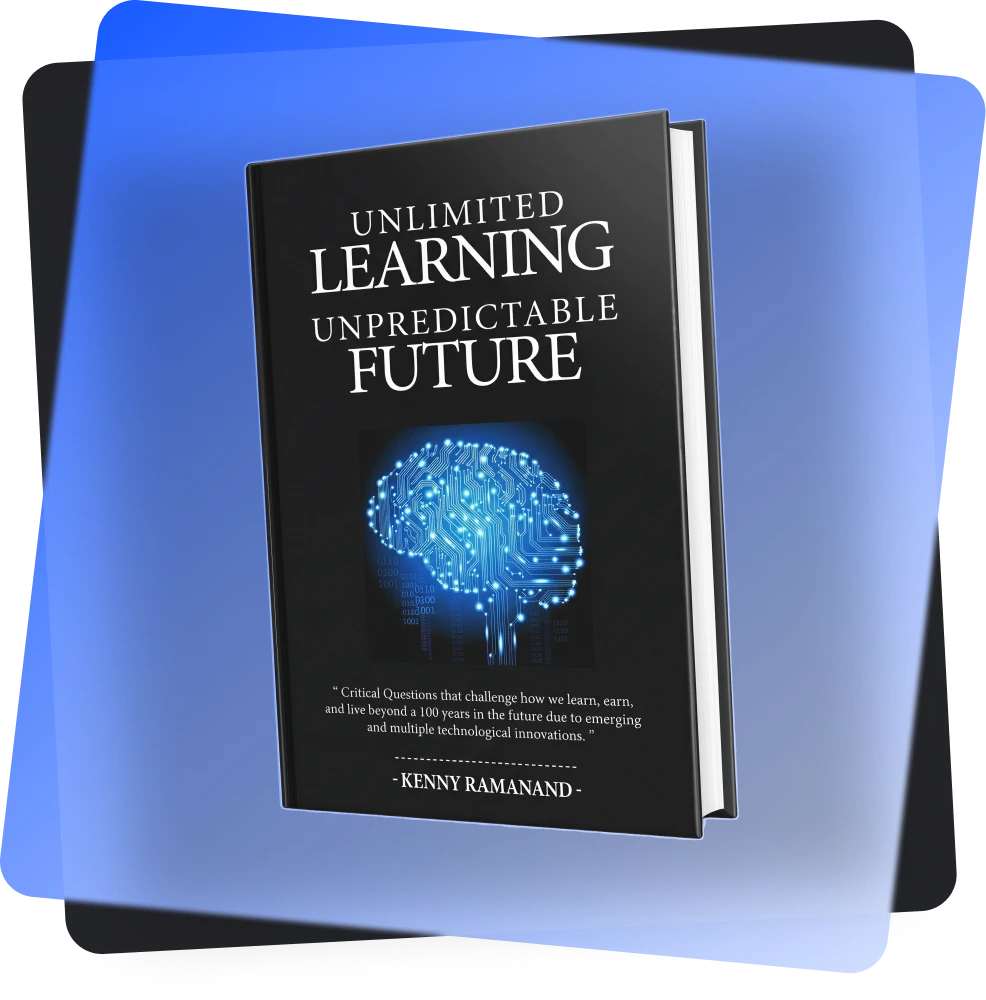
Unlimited Learning,
Unpredictable Future
Critical Questions that challenge how we learn, earn, and live beyond a 100 years in the future due to emerging and multiple technological innovations.
Buy the Book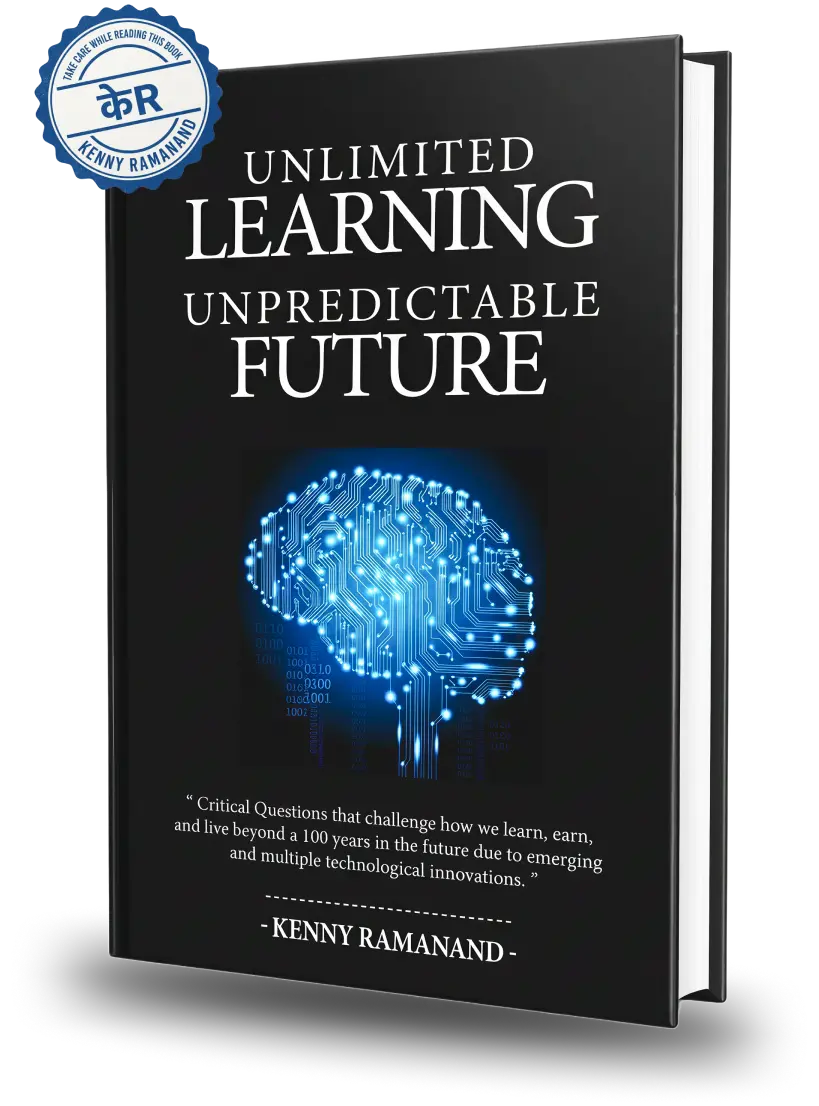
Introduction of the Book
As we stand at the edge of a radically different tomorrow, the very foundations of how we learn, earn, and live are being reshaped by technologies that, until recently, belonged to the realm of imagination. Unlimited Learning, Unpredictable Future is a journey through the defining questions that will shape our next century—especially as human lifespans extend beyond 100 years and the old scripts of "education, job, retirement" begin to crumble. This book asks whether our inherited models of schooling, work, and success are still relevant, or whether we are clinging to systems that cannot prepare us for a future we barely understand. Below are the questions we need to ask as a civilised society.
Rethinking Learning in an Age of Longevity
In a world where knowledge is abundant and instantly accessible, the idea of education as a one-time phase in youth is dangerously outdated. This chapter examines how lifelong learning must evolve when careers multiply, identities shift, and life itself may span more than a century. It challenges the notion of degrees as final destinations, instead proposing learning as an ongoing practice—fluid, self-directed, and deeply personal. The central question: are we redesigning learning for a 100-year life, or are we stretching a 20th-century model far beyond its breaking point?
Is Technology Warming a Bigger Threat Than Global Warming?
Here, the book takes on a provocative comparison: is “technology warming”—our accelerating dependence on digital systems—ultimately more corrosive to human life than global warming? Without trivialising the climate crisis, this chapter explores how technology reshapes attention, relationships, politics, and even our relationship with nature. It asks whether the same tools that promise progress also risk hollowing out our capacity for empathy, reflection, and stewardship. We probe a difficult tension: can we harness technology without allowing it to quietly reprogram what we value?
AI, Intelligence, and the Future of the Human Mind
Artificial intelligence does not merely automate tasks; it interrogates our very idea of intelligence. This chapter frames two unsettling possibilities: is AI making naturally intelligent people artificially stupid by outsourcing their thinking, or is it enabling normally limited minds to become artificially intelligent? We explore how algorithmic guidance affects memory, reasoning, creativity, and judgment. When every answer is a click away, do we deepen understanding or merely accumulate information? This chapter invites readers to defend and redesign human cognition in an era when machines increasingly simulate it.
The Olympics of Distraction and the Business of Education
Our tools have become our trainers. Remote controls,
smartphones, endless feeds, and notifications are not neutral
devices; they are infrastructures of distraction. This chapter
asks: have remotes and mobiles been preparing us for an
“Olympics of distraction,” where our attention is the gold
medal everyone is competing for? We examine the rise of
attention economics and its subtle invasion into classrooms,
homes, and workplaces.
From there, we turn to a deeper structural question: why
has education itself become a business model? When schools,
colleges, and ed-tech platforms are driven by revenue targets,
do learners become customers rather than seekers of knowledge?
This chapter interrogates fee structures, credential
inflation, coaching cultures, and the commodification of
aspirations. It urges a shift from education as an industry to
education as an ecosystem—where access, equity, and genuine
learning take precedence over profit.
Who Will Decide What We Learn?
In the final chapter, we confront a looming reality: as big
tech platforms control our search results, content feeds, and
learning apps, will they also dictate what we learn and how?
When algorithms curate information, recommend courses, and
optimise engagement, what happens to curricular autonomy,
cultural diversity, and independent thought? Have we as
parents defined a business model for our kids and made them
viable business models for the time spent during their
education period?
This chapter urges readers, educators, and policymakers
to resist a future in which a handful of corporations silently
script the intellectual diet of billions. It calls for public
debate, transparent regulation, and a renewed commitment to
human agency in designing learning pathways. The goal is not
to reject technology, but to ensure that tools serve human
development rather than the other way around.
Conclusion: Toward Truly Unlimited Learning
Unlimited Learning, Unpredictable Future is an invitation to reclaim authorship over our lives in a time of dizzying change. It asks us to imagine a future where learning is continuous, not compulsory; where engagement is deep, not distracted; where technology amplifies, rather than erodes, our humanity. Above all, it calls for a generation of readers who refuse to be passive consumers of pre-designed futures and instead become active creators of new possibilities—for themselves, their societies, and the century ahead.
Review